


What Is Asthma?
Asthma is a long-term condition that affects the airways in your lungs. The airways become inflamed, swollen, and more sensitive than usual. When exposed to certain triggers, the muscles around the airways tighten, the lining swells, and extra mucus is produced. This can make it difficult for air to move in and out of your lungs, leading to symptoms such as coughing, wheezing, chest tightness, and shortness of breath.
Asthma can affect people of all ages and may range from mild to severe. Although there is no cure, asthma can usually be managed with medications, avoiding triggers, and following an asthma action plan. With proper treatment, most people with asthma can live active, healthy lives.
Learn More
Asthma – NIH MedlinePlus
https://medlineplus.gov/asthma.html
Provides easy-to-understand information about asthma, including symptoms, diagnosis, treatment, medications, and prevention.
Asthma – National Heart, Lung, and Blood Institute (NHLBI)
https://www.nhlbi.nih.gov/health/asthma
Explains what asthma is, common symptoms, causes, and treatment options.
How Common Is Asthma?
Asthma is one of the most common chronic lung diseases in the United States. More than 27 million Americans, including both children and adults, have asthma. Many people successfully manage their asthma with medications and healthy lifestyle habits.
Learn More
Asthma Data & Statistics – Centers for Disease Control and Prevention (CDC)
https://www.cdc.gov/asthma/
Provides current statistics about asthma and its impact in the United States.
What Symptoms Might You Notice?
Asthma symptoms can vary from person to person and may come and go. Some people only experience symptoms during exercise or when exposed to specific triggers, while others have symptoms more often.
Common symptoms may include:
- Wheezing (a whistling sound when breathing)
- Shortness of breath
- Chest tightness
- Persistent coughing
- Coughing at night or early in the morning
- Difficulty exercising
- Feeling out of breath
- Frequent respiratory infections that take longer to recover from
How Is Asthma Diagnosed?
Your healthcare provider will review your symptoms, medical history, family history, and perform a physical examination. They may ask about when your symptoms occur, possible triggers, and whether symptoms improve with asthma medications.
Breathing tests are commonly used to help confirm asthma and determine how well your lungs are working.
Learn More
Diagnosing Asthma – National Heart, Lung, and Blood Institute (NHLBI)
https://www.nhlbi.nih.gov/health/asthma
Explains how asthma is diagnosed and the tests your healthcare provider may recommend.
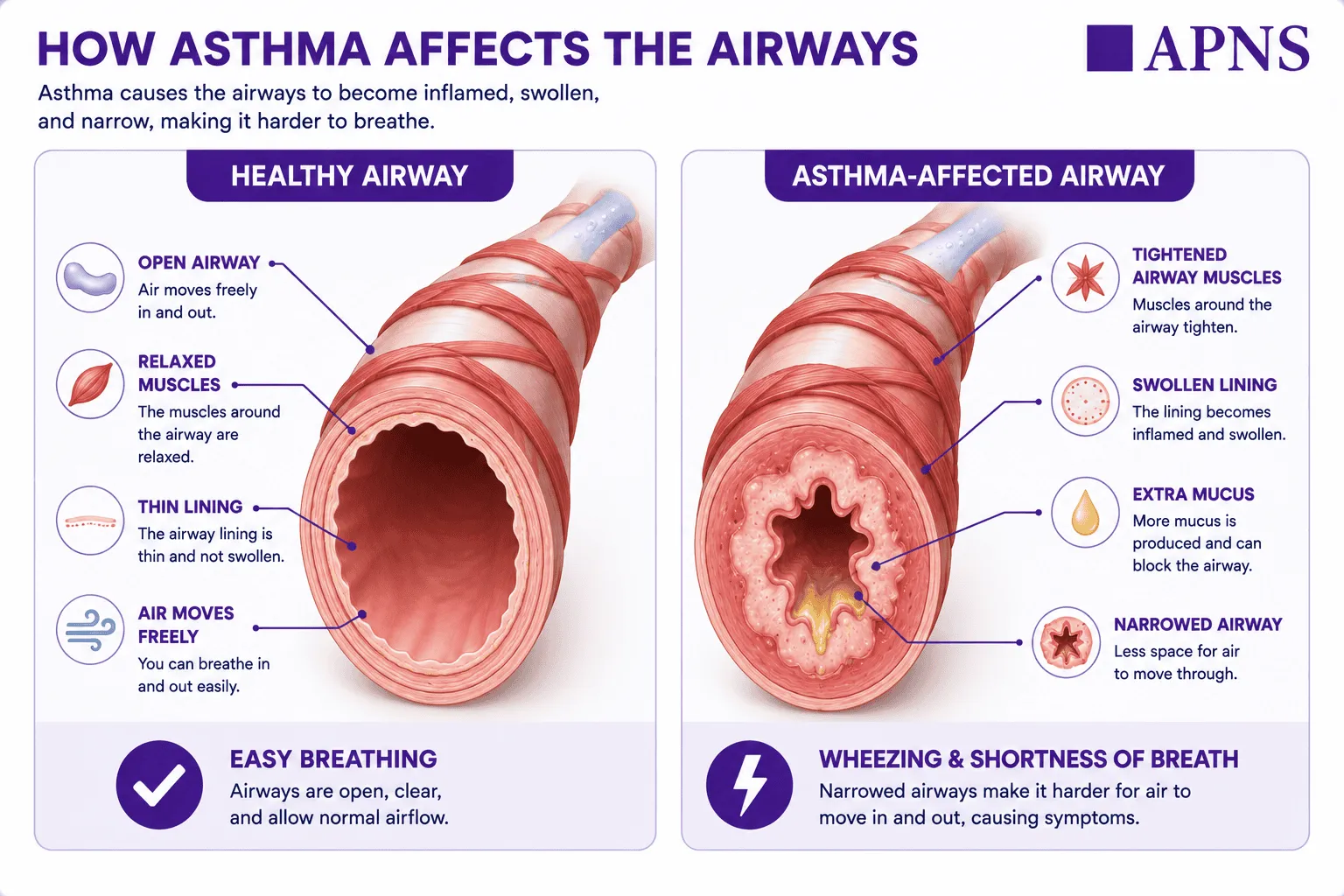 Asthma infographic – click to enlarge
What Causes Asthma?
The exact cause of asthma is not fully understood, but it is thought to result from a combination of genetic and environmental factors. People with asthma have airways that are more sensitive and react to certain triggers by becoming inflamed and narrowed.
Common risk factors include:
- Family history of asthma
- Allergies
- Eczema
- Exposure to tobacco smoke
- Air pollution
- Respiratory infections during childhood
- Occupational exposure to dust or chemicals
- Obesity
Learn More
Asthma Causes and Risk Factors – National Heart, Lung, and Blood Institute (NHLBI)
https://www.nhlbi.nih.gov/health/asthma
Learn about the causes of asthma, common risk factors, and why asthma develops.
What Can Make Asthma Worse?
Certain triggers can cause asthma symptoms or increase the likelihood of an asthma attack. Learning your personal triggers can help you better manage your asthma.
Common triggers include:
- Pollen
- Dust mites
- Pet dander
- Mold
- Cigarette smoke
- Air pollution
- Strong odors or perfumes
- Cold air
- Exercise
- Respiratory infections
- Stress
Learn More
Asthma Triggers – American Lung Association
https://www.lung.org/lung-health-diseases/lung-disease-lookup/asthma
Provides practical information about common asthma triggers and ways to reduce exposure.
Prevention
Although asthma cannot always be prevented, managing your triggers and following your treatment plan can greatly reduce symptoms and lower your risk of asthma attacks.
Helpful prevention tips include:
- Avoid smoking and secondhand smoke.
- Learn and avoid your asthma triggers.
- Take medications exactly as prescribed.
- Keep your vaccinations up to date.
- Wash your hands often to reduce respiratory infections.
- Use allergy medications if recommended.
- Follow your asthma action plan.
- Attend regular healthcare appointments.
Learn More
Asthma Management Guidelines – National Heart, Lung, and Blood Institute (NHLBI)
https://www.nhlbi.nih.gov/health/asthma
Provides recommendations for preventing asthma symptoms and maintaining long-term asthma control.
Learn More About Asthma
The following video content is provided to help you better understand this condition. These resources are intended for educational purposes and should not replace personalized medical advice from your healthcare provider.
Labs
Most people with asthma do not need routine blood tests. Laboratory testing may be recommended if your healthcare provider is evaluating allergies, inflammation, or another condition that may be contributing to your symptoms.
Common laboratory tests may include:
- Complete Blood Count (CBC): May identify elevated eosinophils associated with some types of asthma.
- Allergy Blood Testing (Specific IgE): Helps identify certain allergic triggers.
- Total IgE Level: May be measured in selected situations.
- Eosinophil Count: Helps identify eosinophilic asthma in some patients.
Learn More
Asthma Tests – American Academy of Allergy, Asthma & Immunology (AAAAI)
https://www.aaaai.org/tools-for-the-public
Provides information about allergy testing and laboratory tests that may help evaluate asthma.
Diagnostics
Several tests may help confirm an asthma diagnosis and evaluate how well your lungs are working.
Common diagnostic tests include:
- Spirometry: Measures how much air you can breathe in and out and how quickly you can exhale.
- Peak Flow Measurement: Measures how well air moves out of your lungs.
- Bronchodilator Response Testing: Evaluates whether lung function improves after using an inhaler.
- Fractional Exhaled Nitric Oxide (FeNO): Measures airway inflammation in selected patients.
- Chest X-ray: May be used to rule out other conditions causing breathing problems.
Learn More
Pulmonary Function Tests – American Lung Association
https://www.lung.org/lung-health-diseases/lung-procedures-and-tests/lung-function-tests
Explains common breathing tests used to diagnose asthma and other lung conditions.
Treatment & Management
Treatment Options
Asthma treatment focuses on preventing symptoms, reducing airway inflammation, and helping you breathe normally. Most people achieve good asthma control by taking medications as prescribed and avoiding known triggers.
Treatment options may include:
- Daily controller medications
- Quick-relief (rescue) inhalers
- Allergy treatment
- Asthma action plans
- Biologic medications for severe asthma
- Pulmonary rehabilitation in selected situations
Learn More
Asthma Treatment – National Heart, Lung, and Blood Institute (NHLBI)
https://www.nhlbi.nih.gov/health/asthma
Provides information about asthma medications, treatment plans, and long-term management.
Lifestyle Changes
Healthy lifestyle habits can help reduce asthma symptoms and lower your risk of asthma attacks. Avoiding triggers and taking medications consistently are important parts of asthma management.
Helpful lifestyle changes include:
- Avoid smoking and secondhand smoke.
- Learn and avoid your asthma triggers.
- Take controller medications exactly as prescribed.
- Carry your rescue inhaler if recommended.
- Stay physically active as tolerated.
- Maintain a healthy weight.
- Get recommended vaccines, including influenza and COVID-19 vaccines.
- Wash your hands regularly to reduce respiratory infections.
- Keep regular healthcare appointments.
Learn More
Living With Asthma – American Lung Association
https://www.lung.org/lung-health-diseases/lung-disease-lookup/asthma/living-with-asthma
Provides practical tips for managing asthma at home and staying healthy.
Medications
Asthma medications help prevent symptoms, reduce airway inflammation, and quickly relieve breathing problems during an asthma attack. Your healthcare provider will recommend medications based on how often your symptoms occur and how severe your asthma is.
Common medications include:
- Short-Acting Beta Agonists (SABA): Rescue inhalers such as albuterol provide quick relief during asthma symptoms.
- Inhaled Corticosteroids (ICS): Help reduce airway inflammation and prevent asthma attacks.
- Long-Acting Beta Agonists (LABA): Often combined with inhaled corticosteroids for long-term asthma control.
- Leukotriene Receptor Antagonists: Oral medications that help reduce airway inflammation.
- Biologic Medications: May be recommended for severe asthma that is not controlled with standard treatments.
Learn More
Albuterol – NIH MedlinePlus
https://medlineplus.gov/druginfo/meds/a682145.html
Explains how albuterol works, how to use it correctly, and possible side effects.
Asthma Medicines – National Heart, Lung, and Blood Institute (NHLBI)
https://www.nhlbi.nih.gov/health/asthma
Provides information about the different medications used to treat asthma and how they work.
Procedures
Most people with asthma do not need surgery or an invasive procedure. However, if asthma is severe or difficult to control despite medications, your healthcare provider may recommend additional treatments to help improve your symptoms.
Common procedures and advanced treatments may include:
- Allergy Immunotherapy (Allergy Shots): May help reduce symptoms for people whose asthma is triggered by allergies.
- Biologic Therapy: Injectable medications that target specific parts of the immune system for severe asthma.
- Bronchial Thermoplasty: A specialized procedure that uses heat to reduce excess muscle in the airways for selected adults with severe asthma.
Learn More
Bronchial Thermoplasty – American Lung Association
https://www.lung.org/lung-health-diseases/lung-procedures-and-tests/bronchial-thermoplasty
Learn about bronchial thermoplasty, who may benefit from the procedure, and what to expect.
What Should You Expect Long-Term?
Asthma is a long-term condition, but many people successfully manage it and live active, healthy lives. Following your asthma action plan, taking medications as prescribed, and avoiding known triggers can help reduce symptoms and prevent asthma attacks.
Regular follow-up appointments allow your healthcare provider to monitor your asthma, adjust medications when needed, and help keep your symptoms under good control.
What Can You Do At Home?
Managing asthma at home is an important part of staying healthy and preventing flare-ups. Knowing your triggers and following your treatment plan can help reduce asthma symptoms and improve your quality of life.
Helpful tips include:
- Take your controller medications every day if prescribed.
- Carry your rescue inhaler with you.
- Follow your personalized asthma action plan.
- Avoid smoking and secondhand smoke.
- Reduce exposure to known asthma triggers.
- Keep your vaccinations up to date.
- Exercise regularly if approved by your healthcare provider.
- Use a peak flow meter if recommended.
- Keep regular follow-up appointments.
Learn More
Living With Asthma – American Lung Association
https://www.lung.org/lung-health-diseases/lung-disease-lookup/asthma/living-with-asthma
Provides practical advice for managing asthma, preventing flare-ups, and living an active lifestyle.
Frequently Asked Questions
Can I exercise if I have asthma?
Yes. Most people with asthma can safely exercise when their symptoms are well controlled. Your healthcare provider may recommend using your rescue inhaler before exercise if needed.
Can asthma go away?
Some children may have fewer symptoms as they get older, but asthma can return later in life. Many adults continue to have asthma throughout their lives.
Is asthma contagious?
No. Asthma cannot be spread from one person to another.
Can allergies make asthma worse?
Yes. Allergies are one of the most common asthma triggers. Managing your allergies may help improve asthma control.
How often should I use my rescue inhaler?
If you need your rescue inhaler more often than recommended by your healthcare provider, it may be a sign that your asthma is not well controlled. Contact your healthcare provider to discuss your treatment plan.

Questions To Ask Your Provider
Consider asking your healthcare provider:
- What type of asthma do I have?
- What triggers my asthma symptoms?
- Do I need a daily controller medication?
- How often should I use my rescue inhaler?
- Should I have an asthma action plan?
- Is my inhaler technique correct?
- When should I schedule a follow-up appointment?
Specialist Referrals
Many people with asthma receive care from their primary care provider. If your asthma is severe, difficult to control, or associated with allergies, your provider may recommend seeing a specialist.
You may be referred to:
- Pulmonologist: A doctor who specializes in lung diseases.
- Allergist/Immunologist: Specializes in allergies, asthma, and immune system disorders.
- Respiratory Therapist: Provides education on inhaler use, breathing techniques, and asthma management.
Learn More
Find an Allergist – American College of Allergy, Asthma & Immunology (ACAAI)
https://acaai.org/find-an-allergist/
Locate a board-certified allergist and learn more about specialty asthma and allergy care.
Is Asthma Curable?
There is currently no cure for asthma. However, many people are able to keep their symptoms well controlled through medications, avoiding triggers, and following their asthma treatment plan.
Some children may experience fewer symptoms as they get older, while many adults continue to manage asthma throughout their lives.
Emergency Symptoms / When To Seek Immediate Help
Call 911 or seek emergency medical care immediately if you experience:
- Severe shortness of breath
- Difficulty speaking because of trouble breathing
- Lips or fingernails turning blue or gray
- Chest tightness that does not improve after using your rescue inhaler
- Rapid breathing that continues to worsen
- Severe wheezing
- Confusion or difficulty staying awake
- Symptoms that continue to worsen despite following your asthma action plan
Learn More
Asthma Attack – American Lung Association
https://www.lung.org/lung-health-diseases/lung-disease-lookup/asthma/asthma-attack
Learn how to recognize an asthma attack and when emergency medical care is needed.
CALL 911
APNS does not provide emergency medical services. If you believe you are experiencing a medical emergency, including (but not limited to) chest pain, difficulty breathing, stroke symptoms, severe allergic reactions, anaphylaxis, uncontrolled bleeding, seizures, loss of consciousness, or any other potentially life-threatening condition, you are instructed to call 911 immediately or go immediately to the nearest emergency department.
Official Resources / External Links
Asthma – NIH MedlinePlus
https://medlineplus.gov/asthma.html
Patient-friendly information about asthma, including symptoms, diagnosis, treatment, medications, and prevention.
National Heart, Lung, and Blood Institute (NHLBI) – Asthma
https://www.nhlbi.nih.gov/health/asthma
Comprehensive information about asthma causes, diagnosis, treatment, medications, and living with asthma.
Centers for Disease Control and Prevention (CDC) – Asthma
https://www.cdc.gov/asthma/
Provides reliable information about asthma statistics, management, and public health recommendations.
American Lung Association – Asthma
https://www.lung.org/lung-health-diseases/lung-disease-lookup/asthma
Evidence-based patient education about asthma, asthma attacks, medications, and healthy living.
This guide is intended for educational purposes only and should not replace medical advice, diagnosis, or treatment from your healthcare provider. Always follow the recommendations of your healthcare team regarding your individual health needs. Contact your healthcare provider if your asthma symptoms become more frequent, your medications are no longer working as expected, or you have concerns about your asthma management. Call 911 immediately if you experience signs of a severe asthma attack or another medical emergency.
Get personalized care for Asthma
At APNS, our providers take the time to understand your condition and your goals. We offer comprehensive telehealth visits at a fixed rate — no membership fees, no insurance required, and no unexpected charges. Whether you’re newly diagnosed or looking for a provider who actually listens, we’re here to help.