


What Is Metabolic Syndrome?
Metabolic syndrome is a group of health conditions that occur together and increase your risk of developing serious health problems, including heart disease, stroke, and type 2 diabetes. Rather than being a single disease, metabolic syndrome is diagnosed when a person has several risk factors at the same time. These risk factors commonly include increased waist size, high blood pressure, high blood sugar, high triglycerides, and low HDL (“good”) cholesterol.
Many people with metabolic syndrome feel completely healthy and may not notice any symptoms. Because these risk factors often develop gradually, regular checkups are important for early detection. The good news is that metabolic syndrome can often be improved or even reversed through healthy lifestyle changes, weight loss, regular physical activity, and treatment of individual risk factors when needed.
Learn More
Metabolic Syndrome – National Heart, Lung, and Blood Institute (NHLBI)
https://www.nhlbi.nih.gov/health/metabolic-syndrome
Learn what metabolic syndrome is, why it develops, and how it increases your risk for heart disease and diabetes.
Metabolic Syndrome – Cleveland Clinic
https://my.clevelandclinic.org/health/diseases/10783-metabolic-syndrome
Provides an easy-to-understand overview of metabolic syndrome, including symptoms, causes, diagnosis, treatment, and prevention.
How Common Is Metabolic Syndrome?
Metabolic syndrome is very common, affecting about 1 in 3 adults in the United States. It becomes more common with age and is seen more often in people who are overweight or obese, have prediabetes or diabetes, or have a family history of heart disease.
Learn More
Metabolic Syndrome – National Heart, Lung, and Blood Institute (NHLBI)
https://www.nhlbi.nih.gov/health/metabolic-syndrome
Provides information about how common metabolic syndrome is and who is at greatest risk.
What Symptoms Might You Notice?
Many people with metabolic syndrome do not have noticeable symptoms. Often, the individual conditions are found during a routine healthcare visit.
Possible signs or symptoms may include:
- Increased waist size (abdominal obesity)
- High blood pressure
- Elevated blood sugar
- Fatigue
- Increased thirst
- Frequent urination
- Darkened areas of skin around the neck or underarms (acanthosis nigricans)
- High triglycerides or low HDL cholesterol found on blood tests
How Is Metabolic Syndrome Diagnosed?
Your healthcare provider will review your medical history, perform a physical examination, measure your waist circumference and blood pressure, and order blood tests. A diagnosis is typically made when a person has three or more of the five major risk factors associated with metabolic syndrome.
These risk factors include:
- Increased waist circumference
- Elevated blood pressure
- Elevated fasting blood sugar
- High triglycerides
- Low HDL (“good”) cholesterol
Learn More
Metabolic Syndrome – National Heart, Lung, and Blood Institute (NHLBI)
https://www.nhlbi.nih.gov/health/metabolic-syndrome
Explains how healthcare providers diagnose metabolic syndrome and the criteria used for diagnosis.
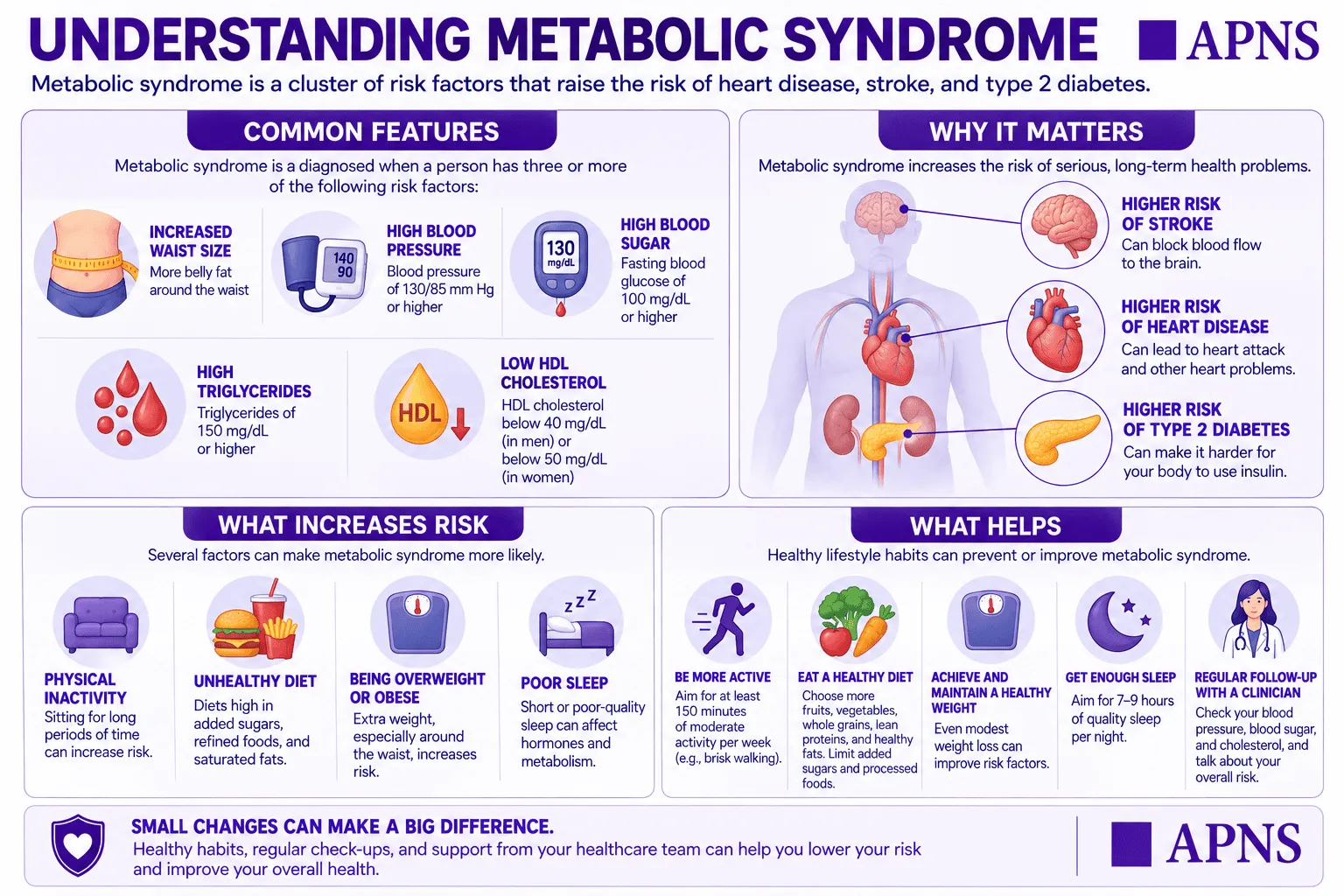 Metabolic Syndrome infographic – click to enlarge
What Causes Metabolic Syndrome?
Metabolic syndrome develops when several health conditions occur together. Insulin resistance, excess body fat around the abdomen, physical inactivity, genetics, and aging all play important roles.
Risk factors include:
- Excess body weight, especially around the waist
- Physical inactivity
- Insulin resistance
- Prediabetes or type 2 diabetes
- Family history of diabetes or heart disease
- Increasing age
- Smoking
- Unhealthy eating habits
- Certain hormonal conditions, such as polycystic ovary syndrome (PCOS)
Learn More
Metabolic Syndrome – National Heart, Lung, and Blood Institute (NHLBI)
https://www.nhlbi.nih.gov/health/metabolic-syndrome
Explains the causes and risk factors associated with metabolic syndrome.
What Can Make Metabolic Syndrome Worse?
Several lifestyle and health factors can increase your risk of developing metabolic syndrome or make existing risk factors more difficult to control.
These include:
- Physical inactivity
- Weight gain
- Diets high in added sugars and processed foods
- Smoking
- Excess alcohol intake
- Poor sleep
- Chronic stress
- Not taking medications as prescribed
Learn More
Healthy Living With Metabolic Syndrome – American Heart Association
https://www.heart.org/
Provides information about healthy lifestyle habits that can improve heart health and reduce your risk of complications.
Prevention
Healthy lifestyle habits are the best way to prevent metabolic syndrome or reduce its progression. Even small improvements in weight, nutrition, and physical activity can significantly lower your risk of future health problems.
Helpful prevention strategies include:
- Maintain a healthy weight.
- Eat a balanced, heart-healthy diet.
- Exercise regularly.
- Avoid smoking.
- Limit alcohol.
- Get enough sleep.
- Manage stress.
- Keep regular healthcare appointments.
Learn More
Preventing Heart Disease – American Heart Association
https://www.heart.org/en/health-topics/consumer-healthcare/what-is-cardiovascular-disease/prevention-and-treatment-of-cardiovascular-disease
Provides practical information about preventing heart disease through healthy lifestyle habits.
Learn More About Metabolic Syndrome
The following video content is provided to help you better understand this condition. These resources are intended for educational purposes and should not replace personalized medical advice from your healthcare provider.
Labs
Several laboratory tests are commonly used to diagnose metabolic syndrome and monitor your overall health.
Common laboratory tests include:
- Fasting Blood Glucose: Measures your blood sugar after fasting.
- Hemoglobin A1C (HbA1c): Evaluates your average blood sugar over the past 2–3 months.
- Lipid Panel: Measures total cholesterol, LDL, HDL, and triglycerides.
- Comprehensive Metabolic Panel (CMP): Evaluates kidney function, liver function, and electrolytes.
Learn More
Blood Glucose Test – NIH MedlinePlus
https://medlineplus.gov/lab-tests/glucose-test/
Explains blood glucose testing and what the results may indicate.
Cholesterol Tests – NIH MedlinePlus
https://medlineplus.gov/lab-tests/cholesterol-levels/
Reviews cholesterol testing and why it is important for heart health.
Diagnostics
Most people with metabolic syndrome do not need specialized diagnostic tests beyond a physical exam and blood work. Additional testing may be recommended to evaluate heart health or screen for complications.
Additional tests may include:
- Blood pressure measurements
- Waist circumference measurement
- Body mass index (BMI)
- Electrocardiogram (ECG), if indicated
- Heart disease risk assessment
- Kidney function evaluation
Learn More
Metabolic Syndrome – National Heart, Lung, and Blood Institute (NHLBI)
https://www.nhlbi.nih.gov/health/metabolic-syndrome
Learn how healthcare providers evaluate metabolic syndrome and monitor for related health conditions.
Treatment & Management
Treatment Options
Treatment focuses on reducing your risk of heart disease, stroke, and type 2 diabetes by improving each of the conditions that make up metabolic syndrome. Healthy lifestyle changes are the foundation of treatment, and medications may be recommended when lifestyle changes alone are not enough.
Treatment options may include:
- Healthy eating
- Regular physical activity
- Weight loss
- Smoking cessation
- Blood pressure medications
- Cholesterol-lowering medications
- Diabetes medications, when appropriate
Learn More
Metabolic Syndrome – American Heart Association
https://www.heart.org/en/health-topics/metabolic-syndrome
Learn how healthy lifestyle changes and medications can help manage metabolic syndrome and reduce your risk of future health problems.
Lifestyle Changes
Healthy lifestyle changes are the most effective way to improve metabolic syndrome and lower your risk of complications. Even modest improvements in weight, physical activity, and nutrition can make a significant difference.
Helpful lifestyle changes include:
- Eat a balanced diet rich in vegetables, fruits, whole grains, lean proteins, and healthy fats.
- Be physically active most days of the week.
- Work toward and maintain a healthy weight.
- Stop smoking if you smoke.
- Limit alcohol.
- Get 7–9 hours of sleep each night.
- Manage stress in healthy ways.
- Take medications exactly as prescribed.
- Keep regular healthcare appointments.
Learn More
Healthy Eating – Centers for Disease Control and Prevention (CDC)
https://www.cdc.gov/nutrition/
Provides practical nutrition guidance for improving overall health and reducing your risk of chronic disease.
Physical Activity Guidelines – Centers for Disease Control and Prevention (CDC)
https://www.cdc.gov/physicalactivity/
Offers recommendations for physical activity to improve heart health and reduce the risk of metabolic syndrome.
Medications
There is no single medication that treats metabolic syndrome. Instead, medications are used to manage the individual conditions that make up the syndrome and reduce the risk of future complications.
Common medications may include:
- Blood pressure medications
- Cholesterol-lowering medications (such as statins)
- Diabetes medications (such as metformin)
- Medications to lower triglycerides, when appropriate
- Weight management medications for selected individuals
Learn More
Metabolic Syndrome – American Heart Association
https://www.heart.org/en/health-topics/metabolic-syndrome
Learn how medications may be used along with healthy lifestyle changes to reduce your risk of heart disease, stroke, and diabetes.
Procedures
Most people with metabolic syndrome do not need surgery or a medical procedure to treat the condition itself. Treatment usually focuses on healthy lifestyle changes and medications to manage the individual risk factors. In some situations, procedures may be recommended to treat obesity or complications related to metabolic syndrome.
Possible procedures may include:
- Metabolic (Bariatric) Surgery: May be recommended for some people with severe obesity when lifestyle changes and medications have not been successful.
- Cardiac Procedures: If heart disease develops, procedures such as angioplasty or stent placement may be necessary.
- Continuous Glucose Monitoring (CGM): May be recommended for some people with diabetes to help monitor blood sugar levels.
Learn More
Metabolic Surgery – American Society for Metabolic and Bariatric Surgery (ASMBS)
https://asmbs.org/patients
Learn about metabolic surgery, who may benefit, and how it may improve diabetes and other health conditions.
What Should You Expect Long-Term?
Metabolic syndrome is a lifelong health condition, but it can often be successfully managed. Improving even one risk factor can positively affect your overall health, and many people reduce their risk of serious complications through healthy lifestyle changes and regular medical care.
Without treatment, metabolic syndrome increases the risk of developing type 2 diabetes, heart disease, stroke, kidney disease, and other chronic health conditions.
What Can You Do At Home?
Healthy daily habits are one of the most effective ways to improve metabolic syndrome and reduce your risk of complications.
Helpful tips include:
- Eat balanced, heart-healthy meals.
- Stay physically active most days of the week.
- Maintain or work toward a healthy weight.
- Check your blood pressure if recommended.
- Monitor your blood sugar if instructed by your healthcare provider.
- Take medications exactly as prescribed.
- Avoid smoking or vaping.
- Keep all scheduled healthcare appointments.
Learn More
Healthy Living – American Heart Association
https://www.heart.org/en/healthy-living
Provides practical information about healthy eating, exercise, weight management, and heart health.
Frequently Asked Questions
Is metabolic syndrome the same as diabetes?
No. Metabolic syndrome is a group of risk factors that increases your chance of developing type 2 diabetes and heart disease. Not everyone with metabolic syndrome has diabetes.
Can I reverse metabolic syndrome?
Many people improve or reverse metabolic syndrome through healthy lifestyle changes, especially weight loss, regular exercise, and healthy eating.
Do I need medication?
Some people manage metabolic syndrome with lifestyle changes alone, while others need medications to treat high blood pressure, high cholesterol, or high blood sugar.
Can I still eat carbohydrates?
Yes. Healthy carbohydrates such as fruits, vegetables, beans, and whole grains can be part of a balanced diet. Your healthcare provider or dietitian can help you choose the right foods.
How often should I see my healthcare provider?
Your provider will recommend follow-up visits based on your individual health needs and how well your risk factors are being managed.

Questions To Ask Your Provider
Consider asking your healthcare provider:
- Which risk factors do I have?
- What lifestyle changes will have the biggest impact on my health?
- Should I monitor my blood pressure or blood sugar at home?
- What are my cholesterol and blood sugar goals?
- Should I see a dietitian?
- How often should I have follow-up appointments?
What can I do to reduce my risk of heart disease and diabetes?
Specialist Referrals
Many people with metabolic syndrome receive care from their primary care provider. Depending on your individual health needs, additional specialists may become part of your healthcare team.
You may be referred to:
- Endocrinologist: Specializes in diabetes and hormone disorders.
- Cardiologist: Treats heart disease and cardiovascular risk factors.
- Registered Dietitian: Helps develop a healthy eating plan.
- Certified Diabetes Care and Education Specialist (CDCES): If diabetes or prediabetes is present.
- Weight Management Specialist: Assists with obesity treatment when appropriate.
Learn More
Find a Registered Dietitian – Academy of Nutrition and Dietetics
https://www.eatright.org/find-a-nutrition-expert
Locate a registered dietitian who can help develop a personalized nutrition plan.
Is Metabolic Syndrome Curable?
Metabolic syndrome is not considered a disease that is cured with a single treatment. However, many people can significantly improve or even reverse the condition by losing weight, becoming more physically active, eating a healthy diet, and controlling blood pressure, blood sugar, and cholesterol.
Early treatment offers the best opportunity to prevent long-term complications.
Emergency Symptoms / When To Seek Immediate Help
Call 911 or seek emergency medical care if you experience:
- Chest pain or pressure
- Shortness of breath
- Sudden weakness or numbness on one side of the body
- Difficulty speaking or understanding speech
- Sudden vision changes
- Severe dizziness or loss of consciousness
- Symptoms of a heart attack or stroke
Seek medical attention promptly if you notice:
- Very high blood sugar
- Extremely high blood pressure
- Swelling in your legs
- New or worsening shortness of breath
Learn More
Heart Attack Symptoms – NIH MedlinePlus
https://medlineplus.gov/heartattack.html
Learn the warning signs of a heart attack and when to seek emergency medical care.
Stroke – NIH MedlinePlus
https://medlineplus.gov/stroke.html
Learn to recognize the symptoms of a stroke and the importance of seeking immediate treatment.
CALL 911
APNS does not provide emergency medical services. If you believe you are experiencing a medical emergency, including (but not limited to) chest pain, difficulty breathing, stroke symptoms, severe allergic reactions, anaphylaxis, uncontrolled bleeding, seizures, loss of consciousness, or any other potentially life-threatening condition, you are instructed to call 911 immediately or go immediately to the nearest emergency department.
Official Resources / External Links
Metabolic Syndrome – National Heart, Lung, and Blood Institute (NHLBI)
https://www.nhlbi.nih.gov/health/metabolic-syndrome
Comprehensive patient education about metabolic syndrome, risk factors, diagnosis, treatment, and prevention.
Metabolic Syndrome – American Heart Association
https://www.heart.org/en/health-topics/metabolic-syndrome
Reliable information about metabolic syndrome, healthy lifestyle changes, and reducing cardiovascular risk.
Metabolic Syndrome – Cleveland Clinic
https://my.clevelandclinic.org/health/diseases/10783-metabolic-syndrome
Easy-to-understand overview of metabolic syndrome, including symptoms, diagnosis, and treatment.
Centers for Disease Control and Prevention (CDC)
https://www.cdc.gov/
Provides evidence-based information about diabetes prevention, heart health, nutrition, and physical activity.
This guide is intended for educational purposes only and should not replace medical advice, diagnosis, or treatment from your healthcare provider. Always follow the recommendations of your healthcare team regarding your individual health needs. If you experience symptoms of a heart attack, stroke, or another medical emergency, call 911 or seek emergency medical care immediately.
Get personalized care for Metabolic Syndrome
At APNS, our providers take the time to understand your condition and your goals. We offer comprehensive telehealth visits at a fixed rate — no membership fees, no insurance required, and no unexpected charges. Whether you’re newly diagnosed or looking for a provider who actually listens, we’re here to help.